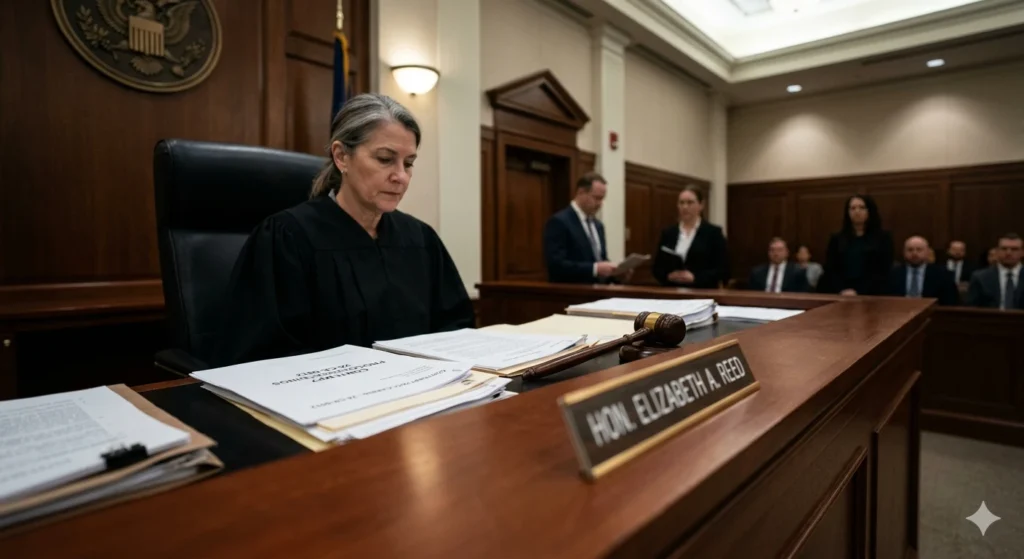

Contempt Proceedings Trump Administration Blocked on Tuesday, a federal appeals court issued a major ruling. It specifically told Chief Judge James Boasberg to stop his criminal contempt probe right away into Trump administration officials. The probe focused on disputed deportation flights that moved Venezuelan migrants to El Salvador.
The US. Court of Appeals for the DC. Circuit ruled 2 to 1. Two Trump-appointed judges, Neomi Rao and Justin Walker, wrote the majority opinion. Together, they decided that Boasberg’s contempt investigation was a clear misuse of discretion.
The Origin of the Legal Battle
The disagreement started in March 2025. On March 15, 2025, Boasberg granted a temporary restraining order. It blocked the government from sending Venezuelan migrants to El Salvador, relying on an old wartime law from the 1700s. Still, the planes took off. Two planes carrying migrants left US. airspace and touched down in El Salvador, where officials shut them inside a notorious, violent prison.
Trump also used war powers to label the men as part of a transnational gang. That move let officials send them away with little or no legal checking. Boasberg later said there was “probable cause” to charge the government with criminal contempt.
Who Authorized the Flights?
Investigators also found the main decision-maker. The Justice Department said that then-DHS secretary Kristi Noem approved the quick transfer of 100 Venezuelan men to a heavily guarded prison in El Salvador. After getting legal advice from top DOJ officials, including then–Deputy Attorney General Todd Blanche and Emil Bove, Noem acted.
Still, the administration pushed back hard. Officials said Boasberg’s first spoken order to stop the flights didn’t have any legal force. They said his written order came after the planes had already flown out of US. airspace.
The Appeals Court’s Core Reasoning
So the appeals court majority agreed with the administration. Rao said that in March 2025, the order from Boasberg didn’t clearly and specifically stop the government from moving the plaintiffs to Salvadoran custody. Because of that, the court concluded criminal contempt couldn’t apply.
The majority said the investigation was an unjustified interference with the executive branch. The appeals court also said Boasberg’s plan to call key officials would unfairly turn a broad, anything-goes review into how the Executive Branch makes national security decisions.
A Sharp Dissent Fires Back
Still, the three judges didn’t all agree. Judge Michelle Childs, appointed by Biden, strongly disagreed and filed an 80-page dissent. Childs cautioned that the majority’s choice could lead to serious harm. She wrote that the court’s decision won’t just shape this contempt case, it will also be heard in future proceedings involving everyone.
Similarly, ACLU attorney Lee Gelernt, lead counsel for the deported migrants, condemned the ruling. Gelernt said the Trump administration dealt a “blow to the rule of law,” because it “willfully violated” the court’s order.
The lawsuit goes on, even after this setback. The deported migrants’ lawyers want the entire DC. Circuit to reconsider the panel’s ruling. Earlier, another appeals panel had already put Boasberg’s investigation on hold. Still, the full DC Circuit allowed him to restart the case last November.
This decision ends one story and starts a new one. The fight over who holds power, how judges decide, and the rights of deported migrants isn’t done yet. So the fight will probably keep growing, and it could end up at the US. Supreme Court.
“Sources: CNN Politics, PBS NewsHour, Fox News, AP via Fox Baltimore”
Recent News:
Expedition 74 Opens Cygnus XL, New Science Equipment