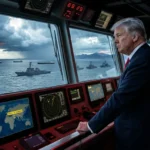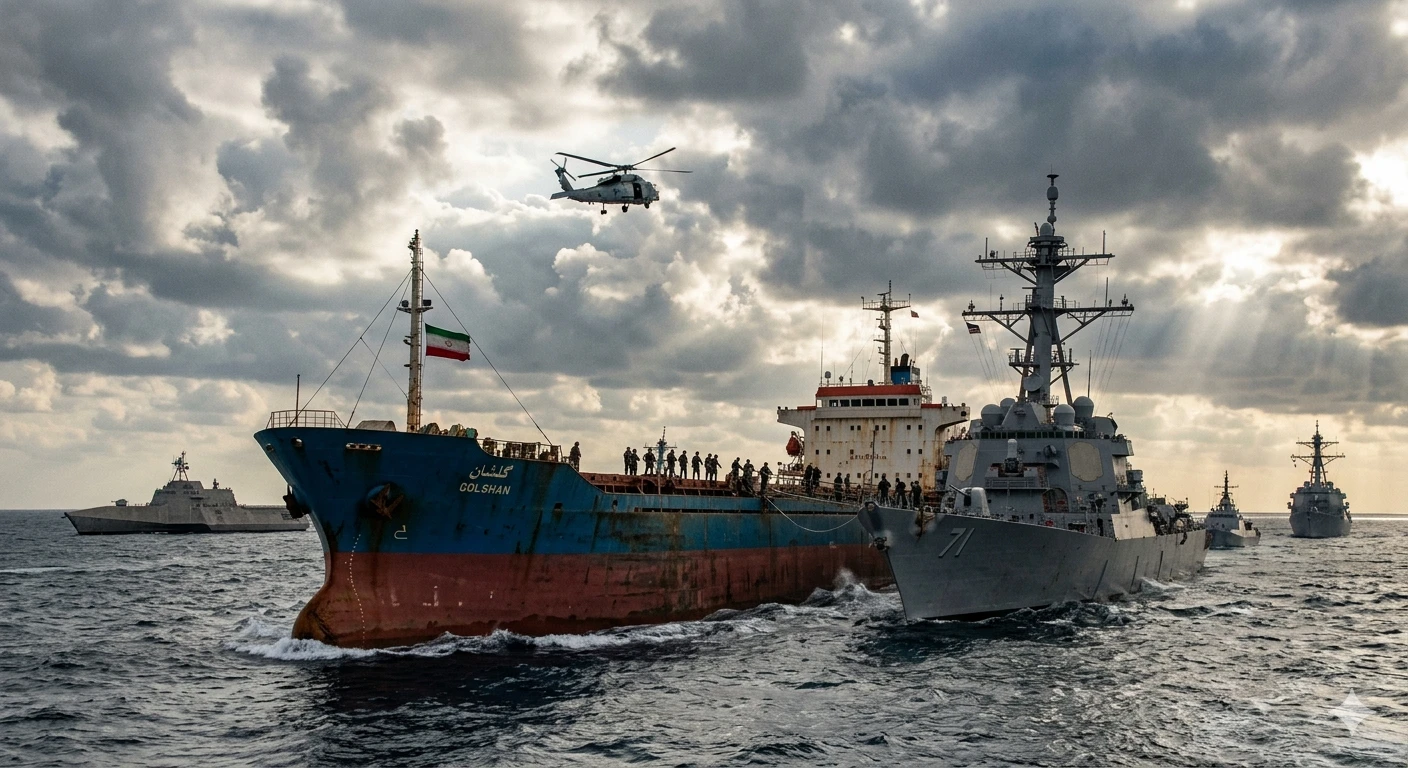
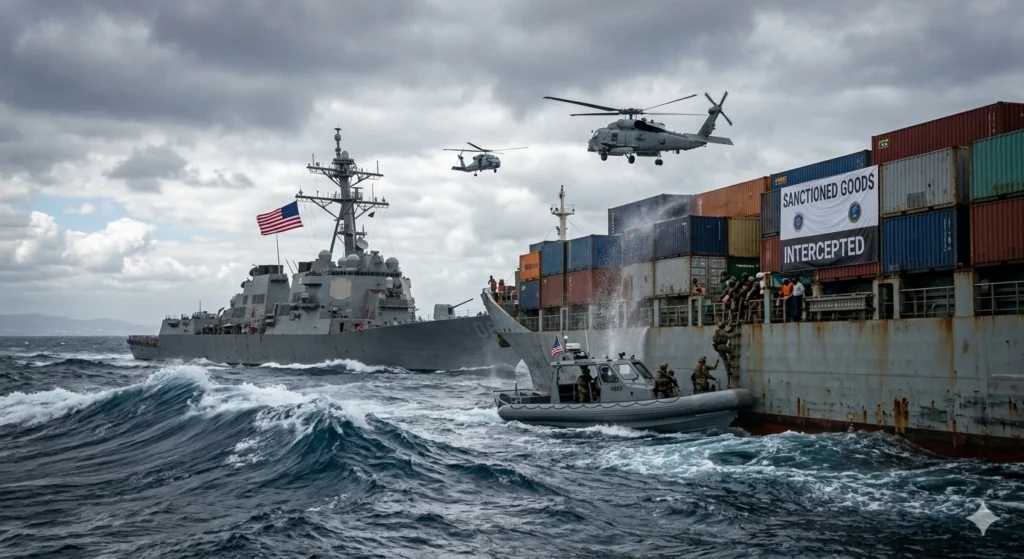

US. Expands Blockade, The US. Navy has greatly increased its naval blockade. It now goes after sanctioned ships that were wrongly flagged and are considered high-risk. Trying to slip past Iran’s maritime border. US. Central Command said Wednesday that its enforcement efforts now go far past the Strait of Hormuz. Reaching the Gulf of Oman and the Arabian Sea.
CENTCOM said the blockade is fully in place, shutting down Tehran’s international shipping and choking off a vital lifeline for about 90% of its economy. Windward, a maritime intelligence company, said ships are still moving through the Strait in small numbers, mostly those under sanctions or using false flags, and those considered high risk, with early enforcement actions already changing how vessels behave.
How It Began
The fighting has escalated because the peace talks fell apart. On April 12, Vice President JD Vance said the US-Iran talks in Islamabad had ended in failure. So Trump ordered a US. naval blockade, saying the Navy would stop ships from coming into or leaving Iranian ports. On April 13, 2026, the blockade finally took full effect.
Enforcement on the Water
The US. Navy wasted no time taking action. The USS Spruance, an Arleigh Burke-class guided-missile destroyer. Sent a ship back toward Iran after it left Bandar Abbas and cleared the Strait of Hormuz. CENTCOM also said 10 ships were stopped and turned back, and not a single vessel managed to get through the blockade.
The enforcement scale is truly remarkable. CENTCOM sent over a dozen ships, more than 100 aircraft, and 10,000-plus troops to carry out the blockade. The Institute for the Study of War said the US. blockade of Iranian ports has no clear geographic limit, meaning American forces can stop ships almost anywhere on the high seas.
Sanctioned Ships at the Center
Sanctioned ships now get even closer scrutiny, beyond routine enforcement. Windward said that vessels under sanctions, and that were wrongly marked, are still operating: some keep moving through the Strait, while others stop, turn back, or reroute. For example, the US-sanctioned tanker Starry Rich initially went into the area but then changed direction. The US. Treasury said it will use every tool it has and is ready to impose secondary sanctions on foreign banks that help Iran sell oil.
Tracking firms also spotted another flagged ship nearby. ELPIS was docked in Bushehr, Iran, and before that the US. had already put sanctions on the ship, back when it was called Chamtang, due to its links to Iran’s oil business.
Global Economic Fallout
The blockade quickly sent shocks through global markets. After the blockade was announced, US. oil jumped to $104.24 per barrel, and Brent rose too, reaching $102.29. The IMF also lowered its 2026 world growth forecast to 3.1% from 3.3%, saying the global economy is sliding toward an unsure and unpredictable road ahead.
Global reactions came pouring in. China said the US. blockade was a risky, irresponsible move that would only add fuel to regional tensions. Likewise, the UK, Australia, Russia, Spain, and the European Union all voted against the measure.
A Diplomatic Door Stays Open
Even with military pressure, diplomacy still goes on side by side. The White House sounded hopeful about a deal with Iran, saying Pakistan is the most likely place for a second round of talks. So while the Navy holds the blockade at sea, Washington sends a clear message: talks could still lead to an exit.
Right now, the US. Navy has strong control of the sea route. As a result, ships that are sanctioned can be stopped at sea and also hit with extra money-pressure from the Treasury. Together, these tools mark Washington’s toughest economic and military pressure on Tehran in decades.
“Sources: CNBC, Military Times, The War Zone (TWZ), Washington Times”
Recent News:
Trump’s Iran Blockade Gamble That Could Decide the War
Contempt Proceedings Trump Administration Blocked by DC Court