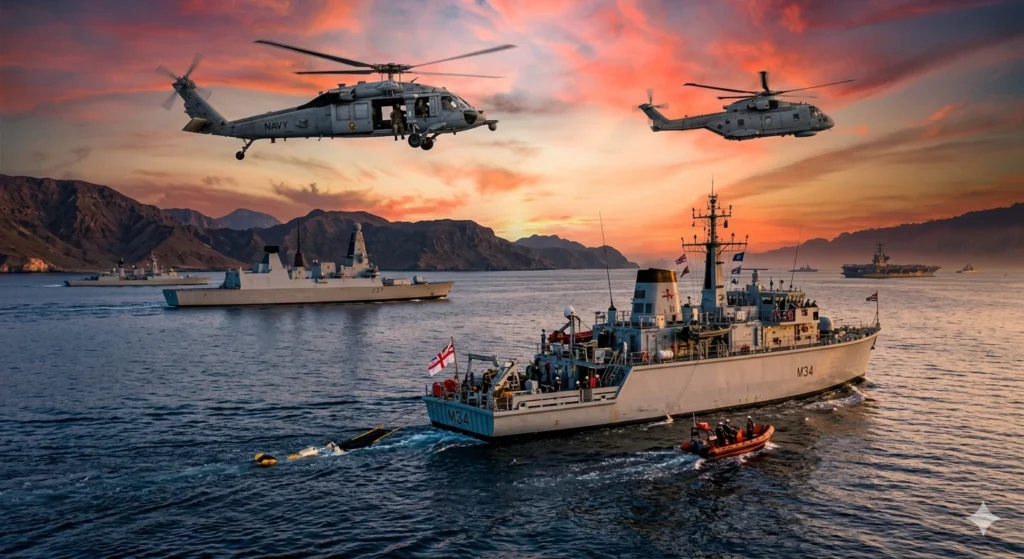

Iran-US Peace Talks Underway; Today in Islamabad, Pakistan, the US. and Iran began landmark peace talks officially. Meanwhile, Trump revealed a major new military plan. He posted on Truth Social that the US. has started removing Iranian mines from the vital Strait of Hormuz.
Trump wrote, “We’re beginning to clear the Strait of Hormuz, as a favor to countries around the world.” Still, he said all 28 Iranian mine-drops boats are “at the bottom of the sea.” But ABC News said it has asked the White House for details on what the clearing operation really involves.
The Talks Begin But Cautiously
Vice President JD Vance heads the US. delegation with special envoy Steve Witkoff and Jared Kushner. Iran’s group of 71 delegates reached Islamabad, led by Parliament Speaker Mohammad Bagher Ghalibaf and Foreign Minister Abbas Araghchi.
Progress still runs into real hurdles. On Saturday morning, a US. official said no deals have been agreed on yet. Iran first held back, because two issues still weren’t settled. Tehran insisted on a Lebanon ceasefire and the release of its frozen assets before talks could officially start.
The Road to Islamabad
To make sense of today’s discussions, go back to February’s events. On February 28, Trump said the US. would begin major combat operations against Iran, with big joint US.-Israeli strikes hitting military and government targets. So Iran tried to limit traffic through the Strait of Hormuz, the channel that moves about one-fifth of the world’s oil.
After weeks of growing threats, help finally arrived on April 7. The US. and Iran agreed to a two-week ceasefire arranged by Pakistan, after about six weeks of fighting roiled global energy markets. Crucially, Trump called off planned bombing missions once Iran agreed to reopen the strait, but with conditions.
The Strait: Still Far From Normal
Even after the ceasefire, the Strait of Hormuz is still badly blocked. White House economic adviser Kevin Hassett said the Strait is running at only around 10% of its usual speed right now. Oil prices are still rising. Hassett said to Fox Business that once the waterway opens fully, futures markets expect energy prices to fall quickly.
Iran floated a controversial idea this week. Reports say Tehran wants to collect a fee from ships passing through the strait, even if a long-term peace deal is reached. Analysts warn this could effectively let Iran control a vital energy route worldwide.
Key Sticking Points
Across the strait, negotiators have a packed agenda to tackle. The US. proposal, reportedly worth 15 points, asks Iran to promise it will not build nuclear weapons, give up highly enriched uranium, and accept limits on its defenses. Trump said it plainly: no nuclear weapons. He said at Joint Base Andrews on Friday, “That’s almost all of it, 99%.”
Lebanon Threatens to Unravel Everything
Lebanon may still be the biggest wildcard. Israeli attacks in Lebanon carried on Saturday morning, putting the Iran ceasefire at serious risk of failing completely. Diplomats from Lebanon and Israel are set to meet in Washington next week, but Israel won’t talk about a ceasefire with Hezbollah.
Some people don’t expect these talks to bring lasting change. As CFR scholar Steven Cook put it plainly, Iran hasn’t undergone regime change, today’s leaders are no less radical, and the country now has more leverage over the Strait of Hormuz than it did before the war.
Both sides reached Islamabad today. Analysts say this is a major step already, even though the toughest talks are still ahead.
“Sources: CBS News, ABC News, NBC News, CNN, Al Jazeera, Council on Foreign Relations”
ŠÐ
Recent News:
Eric Swalwell Governor Bid Hit by Sex Assault Accusation